Membrane filters are an integral component of reverse osmosis (RO) water treatment systems. Their primary function is to remove ions, salts, organic matter, and other contaminants from the water. High efficiency and stability of these membranes are critical for water quality and the system’s profitability. However, membranes are sensitive to operating conditions. Failure to comply with technical requirements can lead to various types of damage, which in turn can result in reduced efficiency, increased costs, and even premature replacement. This article describes the types of membrane damage and how to prevent them.
1. Determine the underlying cause of membrane damage.
To prevent membrane damage, it is important to first understand the risks. The most important factors include:
-
Precipitation: Accumulation of mineral salts such as calcium carbonate, calcium sulfate and silica on the membrane surface.
-
Biofouling: the growth of bacteria, algae and microorganisms in waterways.
-
Organic pollution: accumulation of dissolved or suspended organic substances such as oils, greases, pharmaceuticals and paints.
-
Particle contamination: Dirt, sand, gravel or metal particles have penetrated the membrane.
-
Chemical shock: The membrane comes into contact with free chlorine, oxidizing agents or incompatible materials.
-
Water hammer: A sudden change in pressure or sudden interruption of water flow.
-
Operating errors: incorrect settings for pressure , temperature, pH value and chemical dosage.
2. Adequate pretreatment: the most important preventive measure
Over 80% of membrane problems are caused by ineffective pretreatment systems. Necessary measures include:
 Installation of sand and carbon filters
These filters remove suspended particles, free chlorine and organic substances and prevent them from entering the membrane.
Use a fine filter (5 micrometers).
The cartridge filter is located in the final stage of pretreatment and prevents small suspended particles from entering the reverse osmosis system.
Fine adjustment of pH value and water hardness.
The water entering the membrane must have a controlled pH (normally between 6.5 and 8) and sufficient hardness to reduce the risk of limescale formation.
Anti-pollution injection
Anti-scalding agents are used to prevent the formation of mineral crystals on the membrane surface. Choosing the right type and dosage of anti-scalding agents is crucial.
3. Precise control of operating parameters
For optimal membrane performance, operating conditions must be maintained within the limits recommended by the manufacturer:
| reach | Ideal range |
|---|---|
| Working pressure | 60-250 psi (depending on membrane type) |
| Water temperature | from 25 to 35 degrees Celsius |
| Working pH | From 3 to 10 |
| Recovery speed | Up to 75% – 85% |
| Pressure difference between the stages | Short-term increase of less than 15 psi |
Sudden pressure increases, high temperatures or sudden pH changes can lead to physical or chemical decomposition of the polyamide membrane.
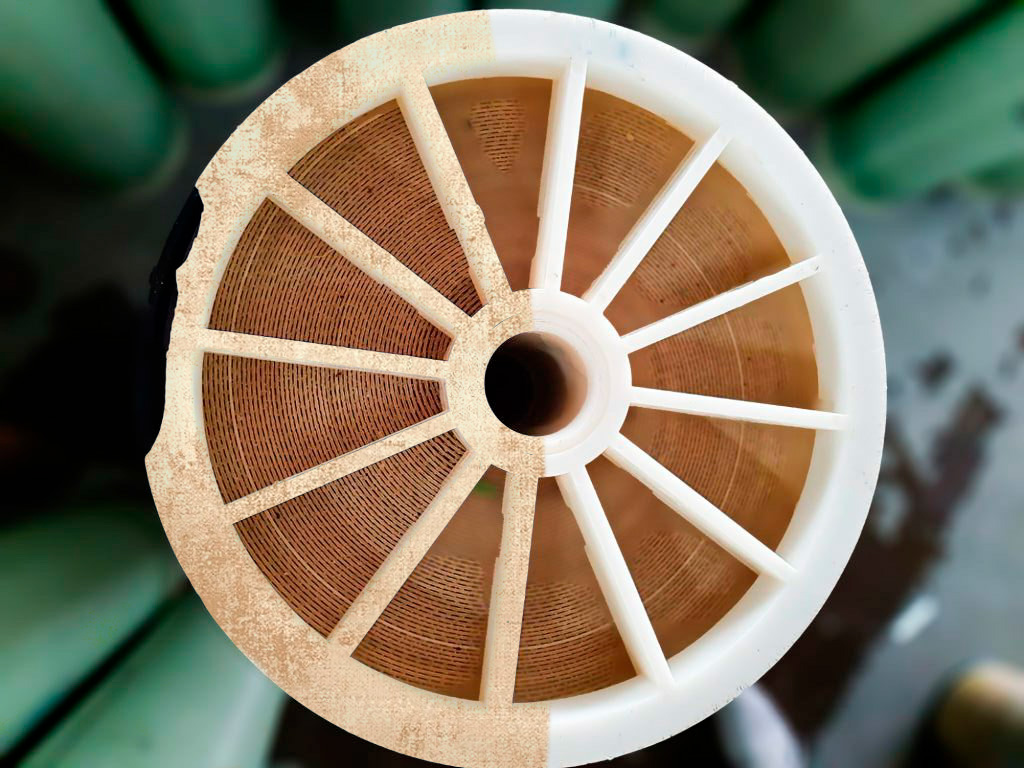 4. Protection from chemical influences and free chlorine.
Polyamide in reverse osmosis membranes is very sensitive to oxidizing agents such as free chlorine. Even brief exposure to low chlorine concentrations (e.g., 0.1 ppm) can lead to degradation of the active layer.
Solution:
-
Install activated carbon filters or sodium metabisulfite injections to remove chlorine.
-
Continuously monitor the free chlorine level in your incoming water with a sensor or test kit.
-
Use a stain repellent compatible with the membrane.
5. Cleaning on site (CIP)
Over time, the membrane surface can become clogged. Regular chemical cleaning (CIP) extends its service life.
Signs that indicate the need for CIP:
-
Reduce runoff
-
Increased pressure difference
-
Deterioration of the quality of the extracted water
Washing tips:
-
Use a cleaning agent suitable for the type of soiling (acidic cleaners for mineral deposits, alkaline cleaners for organic soiling).
-
Maintain a suitable temperature (usually below 45 ° C ).
-
Adjust the pH of the cleaning agent (2 to 4 for acidic and 10 to 12 for alkaline)
6. System startup and shutdown procedures
One of the reasons for membrane damage is rapid start-up or sudden shutdown of the system.
Assumption:
-
Rise: The pressure increases gradually in the first few minutes.
-
Gradual reduction: Reduce the pressure before shutting down the system completely.
-
Inactive storage: For prolonged inactivity (more than 24 hours), the use of an antimicrobial storage solution is recommended.
7. Training and monitoring of operators
Human resources play a crucial role in the smooth operation of a reverse osmosis system. Operating errors, incorrect dosing pump settings, or inadequate parameter monitoring can quickly lead to membrane failure.
Solution:
-
Training operators to adjust chemical dosage
-
Use online monitoring systems for water pressure, flow, and quality.
-
Record data and compare trends to predict errors.
8. Select the appropriate brand and model of membrane.
Membranes vary in performance, materials, pressure ratings, chemical resistance, and price. Choosing the wrong membrane for a specific application can lead to rapid wear and reduced efficiency. For example:
-
For water with a high silicon content, membranes with special resistance are recommended.
-
In water with organic contaminants, membranes with smoother surfaces and higher adsorption resistance showed better performance.
Finally
Membrane filters are the most important components of reverse osmosis systems. Damage to a membrane filter can impair the overall performance of the system and cause significant costs for the operator. The service life of a membrane filter can be significantly extended by carefully identifying the causes of failure, developing a suitable pretreatment system, closely monitoring operating conditions, and regularly maintaining the system. These measures not only reduce downtime but also ensure consistent water quality and save costs.