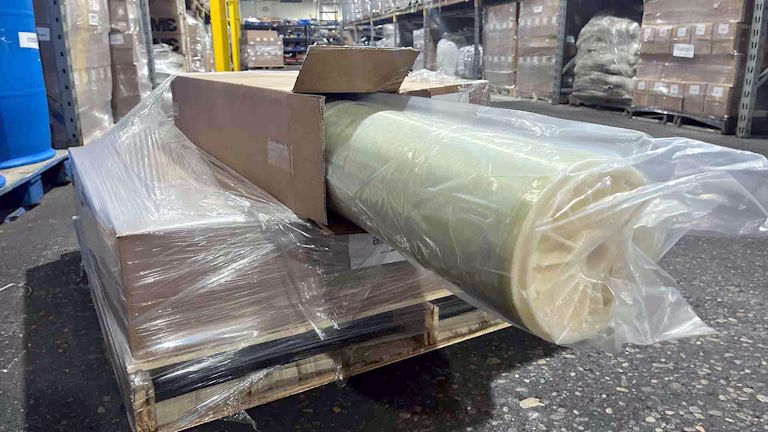
There is no difference in the membrane material. Seawater membranes have a fiberglass outer layer , while brackish water membranes use a tape coating. This construction allows seawater membranes to operate at the higher pressures required for seawater purification.
introduce
With the growing demand for fresh water, the application of modern water purification technologies, especially reverse osmosis (RO) , has expanded significantly. Membrane filters are the foundation of RO systems and play a vital role in separating salts and impurities.
But the point is that not all membranes are created equal. Depending on the type of feed water and salinity, two types of membranes are typically used:
-
Reverse osmosis membrane filter for brackish water
-
Brine or seawater membrane filter (seawater reverse osmosis membrane)
Each filter element has different technical characteristics, operating pressure, capacity, and application. In this article, we’ll thoroughly and professionally analyze the differences between these two filter elements so you can avoid mistakes when choosing the right filter element for your water purification system.
Introduction to the concepts of salt water and brine.
Before studying the differences between filters, it is necessary to understand the concepts of these two types of water.
What is salt water?
Brackish water is water with a concentration of salt and dissolved salts between that of freshwater and seawater. Typically, the total dissolved solids (TDS) content of brackish water is between 1,000 and 10,000 mg/L . Examples of brackish water include:
-
Some wells and groundwater sources in arid areas
-
wastewater treatment plants
-
Rivers near the ocean affected by salinity
What is salt water or sea water?
Brackish or seawater has a very high salt concentration, typically exceeding 30,000 to 45,000 mg/L TDS .
Desalination of this water requires membranes with high pressure resistance and high salinity.
What is a membrane filter and how does it work?
The membrane filter (semipermeable membrane) is a very thin layer of polyamide that allows only water molecules to pass through and prevents the passage of salts, ions and other dissolved particles.
In a reverse osmosis system, raw water is introduced through a membrane at high pressure. The purest water passes through the membrane pores into the permeate section, while the solutes are retained in the retentate section.
The higher the salt concentration of the water, the more pressure is required for water molecules to pass through the membrane; this is what makes saltwater membranes different from brackish water membranes.
Introduction to Labshor Water Membrane Filter
Saltwater membrane filters are used to purify water of moderate salinity.
Main technical characteristics:
-
Influent TDS range: up to approximately 10,000 ppm
-
Operating pressure: approximately 150 to 300 psi (typically 10 to 20 bar)
-
Salt removal rate: 98% to 99.5%
-
Power consumption: lower than saltwater membrane.
-
Production flow rate: High because the membrane resistance is low
-
Applications: Well water, industrial brackish water, recycled wastewater and groundwater sources.
Advantages of Lipshor water film:
-
Lower energy consumption due to lower pressure
-
Reduce maintenance and operating costs
-
High efficiency for medium salinity water sources
-
Longer service life compared to marine membranes under the same conditions.
Introduction to seawater membrane filter
Seawater reverse osmosis membrane filters are designed for desalination of seawater and high salinity water sources.
Main technical characteristics:
-
Influent TDS range: up to approximately 45,000 ppm
-
Operating pressure: approximately 600 to 1200 psi (40 to 80 bar)
-
Salt removal rate: about 99.5% to 99.8%
-
Power consumption: High due to the need for high voltage
-
Production rate: Lower than that of lip film (due to the high density of the film)
-
Application: Seawater, high salinity water, industrial desalination equipment.
Advantages of saltwater membrane:
-
Strong ability to remove salt and heavy ions.
-
Resistant to high salinity and high pressure.
-
High quality effluents (drinking water or industrial water)
-
Suitable for large projects and coastal areas.
Technical differences between brackish water membranes and salt water membranes
In the following table you can see the main differences between these two membranes:
| feature | Lipshor water film | Saltwater membrane |
|---|---|---|
| Salinity range (TDS) | 1.000 a 10.000 ppm | 30.000 a 45.000 ppm |
| Work pressure | 10 to 20 times | 40 to 80 times |
| Salt elimination rate | 98% a 99,5% | 99,5% a 99,8% |
| Energy consumption | Low | a lot |
| outgoing traffic | above | Less |
| Membrane price | More economical | More expensive |
| average life expectancy | Further | Less in similar situations |
| application | Wells, agriculture, light industry | Ocean, heavy industry, coastal desalination |
Differences in membrane design and structure
Technically, the saltwater membrane has a more compact multilayer structure to withstand high pressure and high salinity. The active layer of this membrane is thicker to minimize ionic permeability.
In contrast, brackish water membranes are thinner and have more open pores , allowing them to pass higher velocities of water at lower pressures.
In addition, the backing layer materials of marine membranes are designed to be more resistant to mechanical stress and corrosion.
Differences in operating pressure and pumping systems
One of the main differences between the two types of membrane is the required operating pressure .
For water to pass through the membranes in a reverse osmosis system, a pressure greater than the natural osmotic pressure must be applied.
-
In salt water, osmotic pressure is lower, so a smaller, less energy-consuming pump is sufficient.
-
In salt water or sea water, the osmotic pressure is very high, requiring a more powerful and higher-powered pump.
This makes saltwater purification systems more expensive and energy intensive than brackish water systems .
Difference between cost and economy
1. Purchase and installation costs
Seawater membranes are more expensive than brackish water membranes due to their special design and high resistance. Furthermore, the pumps, pipes, and fittings must withstand high pressure.
2. Operating costs
Saltwater membranes have lower maintenance and energy costs, compared to higher energy consumption and more complex pressure and cooling control systems.
3. Replacement and maintenance costs
Due to harsh operating conditions, brine membranes typically have a shorter lifespan than saltwater membranes, resulting in higher long-term replacement costs.
Different applications of the two membranes
Lipshor water film
-
Purification of water from wells and underground sources
-
Food, beverage and pharmaceutical industries
-
Agriculture and greenhouse systems
-
Wastewater recovery and water recycling units
-
Supply of urban drinking water in semi-arid areas
Saltwater membrane
-
Seawater desalination in coastal cities
-
Supply of industrial water to areas with water shortages
-
refineries and power plants
-
Production of ultrapure water for the petrochemical industry and thermal power plants
-
For ships and offshore installations
Key points for choosing the right membrane
When choosing between brine membranes and salt membranes, the following factors should be considered:
-
Influent TDS: If salinity is less than 10,000 ppm, use a brackish water membrane; otherwise, a seawater membrane is required.
-
Required capacity: For higher flow rates and industrial applications, the choice of membrane type and quantity is very important.
-
System pressure: Pump power and diaphragm working pressure should be checked before purchase.
-
Energy and maintenance costs: If energy resources are limited, wet membrane is a more economical option.
-
Purified water end uses: For drinking water or sensitive industrial uses , marine membranes offer higher quality.
How to maintain and prolong the life of the membrane
Whether it is a seawater or freshwater membrane, the maintenance principles are almost the same:
-
Proper pretreatment: Use fiber and carbon filters to remove particles and chlorine.
-
Regular cleaning (CIP): prevents blockages and deposits.
-
Pressure and flow monitoring: Continuous control to prevent pressure shocks.
-
Prevent the membrane from drying out: Use an anti-corrosion solution during extended power outages.
-
Maintain proper temperature: The inlet water temperature should be within the standard range (usually between 20 and 30 degrees Celsius).
Common mistakes when using membranes
-
Using a saline lip membrane to handle saltwater:
This will cause rapid damage to the membrane and reduce efficiency. -
Neglecting pretreatment:
The presence of chlorine, iron, or large particles will damage the membrane. -
System pressure cannot be regulated:
Excessive pressure or pressure fluctuations can cause the membrane to rupture. -
Neglecting periodic cleaning:
Continuous deposits can cause a permanent reduction in flow.
Conclusion
Membrane filters are the main component of any reverse osmosis water treatment system. The correct selection of membranes for brackish water (BWRO) and sour water (SWRO) directly impacts the system’s performance, lifespan, and operating costs.
In summary:
-
If the inlet water has low or medium salinity (well water, river water, groundwater source), use a saltwater membrane.
-
If the water salinity is high (seawater or saltwater), marine membranes are a suitable option.
By considering operating pressure, system capacity, water quality, and energy costs, you can make a smart and economical decision.
In short, although seawater membrane filters have greater salt removal capacity, for many common applications, brackish water membrane filters can meet the needs at a lower cost. Choosing the right membrane type can ensure clean water, sustainable system operation, and long-term cost savings.