One of Iran’s national crises, which is worsening day by day, is the salinization of groundwater. The overwhelming amount of deep water was harvested in the 1960s through the electrification of villages and cheap electricity. The consumption of cheap electricity by farmers and gardeners makes water virtually free, and there is no need to fear its extraction. We have brought the current critical situation to a point where we need water desalination for agriculture.
Industrial water desalination
Overall, artificial desalination is the optimal and most widely used process for removing salt and water particles worldwide. Its core consists of 8-inch membranes. Industrial desalination in Iran is usually carried out on-site, but the mammals are usually Chinese or European.
Introduction of the membrane filter
As already mentioned, membrane filters are used in water desalination systems, and the correct selection of membrane filters plays a key role in this process. A membrane filter uses pressure to force water or another carrier fluid through a porous or translucent membrane filter. This process separates suspended particles from soluble components and liquids.
Membrane filters are also considered porous because the pores of the membrane filter exhibit certain properties. This is also referred to as porosity, sieve, or sieve. Microorganisms or particles larger than the pore size are absorbed by the surface through the process of adsorption. Particles smaller than the pore size of the membrane filter, on the other hand, are usually retained by other mechanisms.
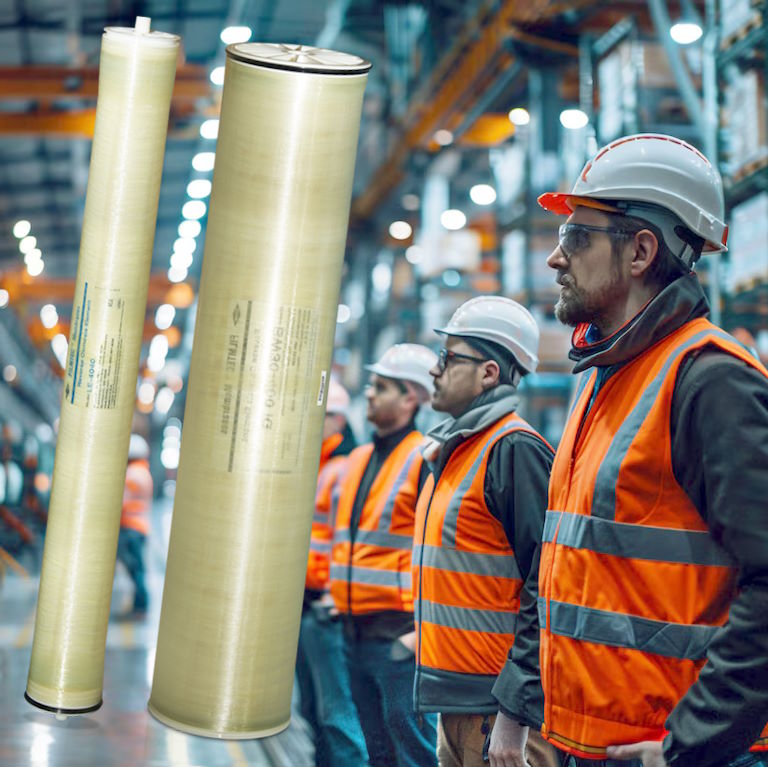
Price and stock of the membrane filter
To find out the price of the membranes and their availability in stock, follow this link
When determining the price of an industrial membrane filter, several factors must be considered:
Brand:
There are many brands like FilmTec, Vonton, Hydrantics, etc. and each has different prices.
Capacity and volume:
Membrane filters are available in different sizes and capacities, which affects the price.
Processing quality:
The quality of the materials and technologies used in the production of the filters are also important.
Inquiry:
The type of use of the filter (e.g. industrial, semi-industrial or seawater purification) can also influence the price.
You can contact reputable sellers to find out exact prices and provide detailed information about your candidate.
Manufacturer of industrial membrane filters:
- Filmtec film
- Ventron Vontron
- Hydranautix nitto
- Toray
- CSM CSM
- Holiday home Holiday home
- Switzerland, Switzerland
- Lanxess Lanxess
- LG, LG
- Membrane membranes
- Porex Porex
- Siemens Seeds
- Lubrin Rubis
- Melibor
- axon, axon
- Tresippus
- Parker, Parker
- Inge
Comparison of FilmC and Hydronics membrane brands
Overall, both brands are high-quality membrane filters made in America, but similar ones are also available in Iran. One thing to note about purchasing these two brands: Due to the high demand for nitrohydronate, counterfeit Filmtec membranes are very common on the market, and it’s difficult to find the main ones. To distinguish Elephant Membranes from this company’s design, follow the link.

Membrane filter
There are several different types of membrane filters available on the market. Different companies and manufacturers offer different products. It’s best to familiarize yourself with the different types of membrane filters to find the one that best meets your needs.
Cellulose mixed ethers for membrane filters
These filters contain cellulose acetate and cellulose nitrate. They are highly porous, clean, and quickly wettable. These are standard membrane filters used for various laboratory applications such as air monitoring, contaminant analysis, microbiology, and the sterilization of biological fluids.
Acetate acetate
These filters contain cellulose and triacetadiacetate. They are sterile, have high strength, and low static load. You can use this membrane filter for applications such as diagnostic cytology, filtration of enzymatic solutions, receptor binding studies, and optimization of work with Gram-positive and complex organisms.

Acetate-coated membrane filter
These filters contain cellulose acetate coated on a polyester nonwoven backing. This membrane filter features a low-static loading matrix with improved chemical modulation. These filters are most commonly used as prefilters or transparent filters.
Material: Hydrophilic PTFE
These filters have the highest pH and chemical resistance. They are clear and transparent when wet and offer high flow rates. You can use this membrane filter for HPLC and other types of organic solvents in combination with blue.
PTFE membrane filter
These filters are very porous, thin, and serve as absolute membrane filter preservatives. They are ineffective even with strong bases, strong acids, and chemically aggressive solvents. You can use this membrane filter for gas sterilization, ventilation, or transparency, as well as for sterilizing strong acids or solvents that are incompatible with other membrane filters.
Nylon membrane filter
These are highly durable, heat-resistant membrane filters with a hydrophilic nature. They are also compatible with solvents, alcohol, and blue solutions. These filters can be used for HPLC sample preparation, for use in transparent vacuum gasoline sterilizers, and for filtering solutions of organic and blue solvents.
Polycarbonate membrane filter
They are capable of photosynthesis when exposed to light and have very uniform cylindrical pores. They are durable, have excellent chemical resistance, and are sufficiently heat-resistant. You can use this membrane filter for epithelial microscopes, electron microscopes, optical microscopes, as well as for beverage testing and sterilization.
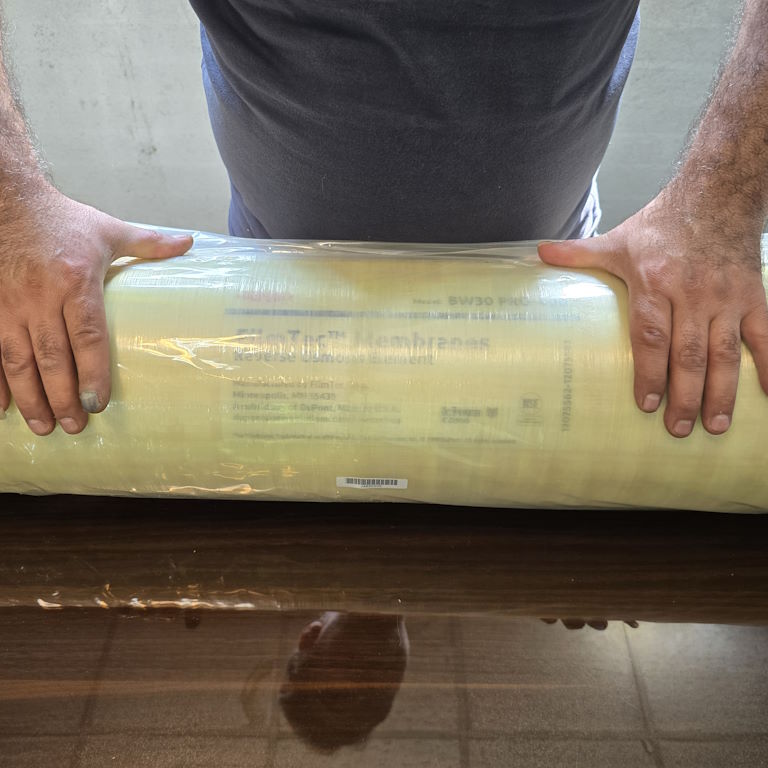
Activities for which you can use a membrane filter
Membrane filters can be very useful for many purposes. Which membrane filter you choose usually depends on the methods you want to use. Here are some ways to use these filters:
Membrane filter
This process is primarily used in the food industry. It is a technology for filtering opaque liquids such as wine, juices, etc. It is also sometimes used in hemodialysis.
Membrane filter
Stainless steel, textile fabric, or plastic can be used as filter material in this process. This process is often used in biotechnology for the separation of water-oil emulsions or for the separation of colloidal hydroxides or oxides.
Nanofilter
This method uses a membrane and a low-pressure filter with larger pores. It is very useful in drinking water treatment, for example, in the removal of heavy metals and water softening.
Super membrane filter
This process is most commonly used in the pharmaceutical industry for protein separation or cold sterilization. It is also useful for wastewater treatment and mineral extraction in metallurgy.
Reverse osmosis membrane filter
This is the boost axis process, where compression essentially unleashes the natural process of osmosis. It is commonly used for water treatment, including drinking water and aquarium water. It can also be very useful for the production of fruit juice concentrates and wastewater treatment.
Question and answer
What is the difference between hydrophobic membrane filters and granular membrane filters?
Membrane filters are impermeable to water and are ideal for applications such as ventilation. Hydrophilic filters, on the other hand, contain an admixture of water and can be used with virtually any liquid.
How to measure the performance of membrane filters
There are three main parameters you can use to test the performance of a membrane filter: flow rate, performance, and bubble point. Flow rate refers to the volume of air or liquid passing through a membrane filter at a constant temperature and pressure.
Typically, you can measure this value in 2 ml per minute or ml per minute. Working capacity refers to the membrane filter’s performance in removing contaminants. This measures the time the fluid flows through the membrane filter before it becomes clogged. Membrane filters with high working capacity and low flow rates mean you can spend more time performing your analysis.
Finally, the bubble point indicates the difference between different pressures at which a wet membrane filter releases a constant stream of gas bubbles under specific test conditions. When testing the bubble point of a membrane filter, this helps determine pore size and integrity. The bubble point test helps measure the largest pores of a membrane filter. You can usually locate the bubble point using alcohol or water.
What factors should be considered when selecting membrane filters?
Before choosing a membrane filter, you need to determine what gas or liquid you’re filtering. Next, you should check the chemical resistance of the filter membranes. Another factor to consider is the maximum pore size required to achieve the desired results. You can also check the membrane filter profile for abnormal processing conditions that could limit your membrane selection. Regardless of the membrane filter’s intended use, there are products that meet your needs.
Which variables influence the performance of membrane filters?
There are three variables that influence the performance of a membrane filter. First, the viscosity of the fluid determines the strength of the membrane filter. Higher viscosity results in lower fluid consumption, and vice versa.
The second factor is porosity, as the flow rate of a membrane filter is directly related to its porosity. This means: the more pores the filter has, the higher the flow rate. The third part is the filter, which has a higher flow rate the larger the filter area.
How to evaluate and dimension membrane filters
You can determine the pore classification based on the particles the membrane filters are expected to retain. This allows you to estimate the pore size with high accuracy. They usually express its absolute or nominal privilege.
Second, the size of the membrane filter can be determined based on the diameter of the remaining particles. You can do this by checking the bubble point or using a living organism.

Cleaning the membrane filter
Membrane filter cleaning is an integral part of membrane filter operation and has a significant impact on process performance. Sediment can be removed using hydraulic methods such as backwashing or chemical methods such as enhanced backwashing (EBW). Cleaning operations can be classified as either clean-in-place (CIP) or offline chemical cleaning (or soaking). CIP involves cleaning the membrane filter unit without removing it from its installation site, while autonomous cleaning involves removing the unit from the system and impregnating it with a chemical.
Backwashing is achieved by reversing the flow direction through the membrane filter, by using a sealant to remove accumulated deposits on the surface of the membrane filter, and/or by blocking the pores of the membrane filter.
In EBW, detergent is added to the backwash water and the water is circulated for a short period of time (10–15 minutes). Chemical cleaning is an integral part of the membrane filter filtration process and has a significant impact on cost-effectiveness and operation. Currently, all types of disinfection chemicals are recommended by membrane filter manufacturers. Some of these are specialized cleaning products, while others are commercially available chemicals. Chemical cleaning is necessary to increase the permeability of the membrane filter. Chemical cleaning is performed when rinsing and/or backwashing cannot restore the permeation flow. With chemical cleaning, the chemical dosage is usually higher than the backwash rate, and the chemical cleaning frequency is usually lower (approximately once a week).
Furthermore, advanced backwashing can be fully automated, whereas dry cleaning requires manual labor due to its inherent characteristics. The correct selection of chemical cleaning agents, their conditions, and an understanding of their effectiveness are important. The choice of cleaning agent is usually based on the type of deposits.
The effectiveness of different operating strategies for precipitation types is summarized in Table 2. As shown in Table 2, chemical cleaning is an effective control strategy for most membrane filter types.
When determining the amount of CIP reagents, the total volume of the system should always be considered. You can use the AWC RO CIP Calculator to calculate the required reagent quantity.
When cleaning an RO system, 20% of the cleaning solution is flushed directly through the membranes rather than recirculated. This prevents contamination of the cleaning solution with loose deposits and large suspended particles.
The remaining solution is then circulated through the system while the differential pressure (DP) is carefully monitored. The DP must not exceed 10 lbs (0.69 times) per membrane element. Every 30–60 minutes, blood circulation can be stopped for 30–60 minutes of “fun.”
To remove loose deposits and allow fresh cleaning agents to reach the membrane surface, blood circulation must be restored. During blood circulation, the pH should be checked every 15–30 minutes. If the pH of the cleaning solution changes, additional cleaning chemicals should be added to bring the pH back within the specified range.
To complete the cleaning, soaking and rolling can be repeated alternately. Cleaning at low pH is assumed to be complete when the pH stabilizes, but the duration of cleaning at high pH should depend on the preset time. The time required to achieve optimal CIP results can be determined by trial and error or by conducting a cleaning study.
High pH cleaning is typically performed at a pH of 11 to 12 using cleaning chemicals such as AWC C-236 for silica, AWC C-237 for biodiversity, or AWC C-227 for heavy organic deposits. Each time the pH drops below 11, additional chemicals are added during cleaning. If the solution becomes too dark or opaque, it should be drained and a new cleaning solution prepared.
Cleaning should be performed at a low pH of 2 to 3 using CIP chemicals such as AWC C-234 or AWC C-235 (phosphorus-free). If the pH of the cleaning solution rises at any time during cleaning, additional cleaning chemicals should be added to lower the pH to the target range of 2 to 3.
Modification of membrane filter properties
The properties of membrane filters influence the reactivity of metals and membrane filters, and thus the amount of adsorption and sediment. Since proteins are adsorbed onto hydrophobic surfaces during protein filtration, the use of granular membrane filters (cellulose esters, aliphatic polyamides) can help reduce deposits on membrane filters.
The antifiltration properties of the membrane filter can be improved by chemically modifying the membrane filter (e.g., polysulfone sulfate) or by combining hydrophobic polymers (polyimide, polyvinyl fluoride) with a hydrostatic type (polyvinylpyrrolidone). Another way to improve the interaction between salts and membrane filters is by pretreating membrane filters with surfactants or hydrophilic enzymes.

Conventional ultrafiltration membrane filters such as polyphon, polyethersulfone or polyvinylidene fluoride can be made more hydrophobic by surface modification using various methods:
-
Membrane filter level of plasma treatment.
-
The polymerization or implantation of the membrane filter surface is initiated by ultraviolet radiation, high temperatures or chemicals.
-
Surface polymerization.
-
The introduction of polar or ionic groups on the surface of the membrane filter occurs through interaction with bromine, fluorine, strong bases and strong acids.
Hydrophonic membrane filter surfaces can also be achieved by using a filter cover without an outlet. This method is very attractive due to its simplicity and practicality.
This treatment significantly improved the ultrafiltration of fish antigen secretion, almost doubling the penetration flux. Another option is to modify and humidify the surface of the membrane filter using ozone.
This treatment introduces peroxide groups onto the polymer surface, which can initiate the implantation of monomers with hydrophilic groups and thus increase the polymer content. The concentration of the peroxide groups present can be used to determine the efficiency of ozonation.
The effect of ozone on permeation flux was investigated using a UV polysulfone membrane filter. It was found that ozone increased permeation flux by up to 10%, and oxidation of the membrane filter with ozone and hydrogen peroxide was more effective.
Ozone delays the formation of larger deposits longer than it delays their removal. It determines the ozone dose and the ozone exposure time for peroxide groups, thus determining the degree of increased hydration of the membrane filter.
Magnetic ion exchange in membrane filters
Magnetic ion exchange (MIEX) is a chemical process in which soluble ions and carrier particles are adsorbed onto polymer beads. After saturation, the semen can be extracted using a saline solution to remove pregnant cheeks and ions.
Since a large percentage of soluble organic carbon (DOC) is polar, it can be removed by MIEX by exchanging chloride ions on the resin surface for polar and colloidal organic matter.
Numerous studies have shown that ion exchange promotes the removal of high-density, medium- to low-molecular-weight organic matter, which may include hydrophilic, tortuous, and hydrophilic regions. Therefore, ion exchange can be synchronized with the coagulation of the DOC feed entering the membrane filtration unit, where the lower-density feed and the hydrophobic, higher-molecular-weight portions are coagulated. Several DOC removal methods have been compared: alum coagulation (without pH adjustment), alum coagulation (with pH 6), ion exchange with MIEX resin, and a combination of alum coagulation and MIEX.
The relative efficiency of the pretreatment methods for DOC removal was ranked in the following order: alum/MIEX > MIEX > alum pH 6 > alum (no pH control). It was also found that MIEX can eliminate the sleep effect on the blood clotting process, even at very high coagulant concentrations. When used as a pretreatment prior to UV initiation, up to 80% NOM is achieved. Furthermore, the combination of coagulation with MIEX enabled the removal of 90% of triadric acid and galenic acid precursors from the water.
Chemical contacts between heterogeneous surfaces in a membrane filter
All previous chemical contact mechanisms are based on the assumption that the reacting surfaces have uniform surface properties and can therefore be defined using some universal parameters such as loading density, water hemagar and water.
However, this may not be realistic, as the particles may have a non-uniform surface. Different surface areas bond to membrane filters in different ways. Furthermore, the membrane filter surface, especially after modification, may exhibit non-uniform surface properties with respect to sludge conductivity. This homogeneity can be explained by a different physical and/or chemical origin.
For example, particle contact with membrane filter pores of various shapes was investigated. It was found that membrane filter pores with rounded corners exhibit the lowest tendency to deposit sediment compared to pores with sharp and protruding corners due to increased electrostatic repulsion.
In another study on the surface heterogeneity of nanofiltration membrane filters and reverse osmosis using chemical microscopy, an AFM-based modification method was investigated to obtain the transverse energy distribution across the surface. It was found that the surfaces of the membrane filters used were chemically heterogeneous, and this homogeneity became more pronounced at micron sizes.
This means that the adhesion of the membrane filter surfaces to the sediment may be uneven and not have the homogeneity discussed previously.