Reverse osmosis membranes are the core component of every water treatment system, whether industrial, semi-industrial, or domestic. They remove dissolved salts, heavy metals, nitrates, bacteria, and many other contaminants. However, their optimal performance depends significantly on regular maintenance and cleaning of the membranes , also known as the CIP (Clean-in-Place) process .
Over time, the membrane surface deteriorates due to deposits, blockages, and microbial growth. If these contaminants are not removed promptly, the system’s efficiency decreases, the operating pressure increases, and the membrane is eventually severely damaged. Therefore, understanding the correct methods for cleaning reverse osmosis membranes is crucial for two reasons:
-
Extending membrane lifespan
-
Improvement of wastewater quality and flow rate
In this article, we explain in detail and with a practical approach how to clean reverse osmosis membranes , when they should be cleaned, which chemicals are suitable, and what to look out for.
Why is it necessary to clean reverse osmosis membranes?
Reverse osmosis membranes have extremely fine pores in the nanometer range. Contaminants or deposits, even in small quantities, impede water flow and reduce the system’s efficiency. The main causes of contaminant accumulation on the membranes include:
1. Scalability
For example, mineral deposits:
-
calcium carbonate
-
Calcium sulfate
-
Barium sulfate and strontium sulfate
-
silicon dioxide
These deposits typically form over time through saturation and chemical reactions and adhere to the membrane surface.
2. Physical coercion (violation)
This type of blockage is caused by the accumulation of suspended particles, such as:
-
clay
-
Glyco
-
Total suspended solids (TSS)
-
soil and organic matter
The accumulation of limescale leads to an increase in pressure loss and a reduction in water flow.
3. Biological contamination and microbial growth
One of the most common problems with reverse osmosis systems is the formation of biofilms caused by the growth of bacteria, algae, and other microorganisms on the membrane surface. These biofilms gradually reduce the membrane’s permeability.
4. Chemical pollution
Oxidizing agents such as free chlorine or certain compounds can damage the membrane surface and reduce its efficiency.
Signs that indicate the reverse osmosis membrane needs cleaning.
An infrastructure improvement program should be implemented if any of the following situations occur:
-
The reduction in membrane pressure increased by more than 15%.
-
The flow permeability decreased by more than 10-15%.
-
Increase the supply pressure to achieve the same flow rate.
-
Increased electrical conductivity or deterioration of wastewater quality
-
The color or smell of the drained water changes drastically.
-
Increase in the pressure difference in the first stage of the membrane.
On average, industrial reverse osmosis systems need to be cleaned every 3 to 6 months, but this number can vary depending on the quality of the water supplied and the design of the system.
Cleaning a reverse osmosis membrane (CIP): A detailed step-by-step guide.
The reverse osmosis membrane must be cleaned according to the system instructions, depending on the type of blockage. Each step must be followed carefully to avoid damaging the membrane. The cleaning steps are described below:
Step 1: Setting up the system
Before work can begin, the reverse osmosis system must be prepared for the CIP cleaning process:
-
Switch off the system and close the inlet and outlet valves.
-
Insulation of various components, including pumps, tanks and membranes.
-
Complete removal of water from the membrane.
-
Check the connections to avoid water or chemical leaks.
-
Make sure the CIP pump is working properly.
During this phase, the temperature of the washing solution should be kept within the standard range (usually 20-30 °C), as higher temperatures can damage the polyamide membrane.

Second step: Prepare a suitable chemical solution.
The choice of chemical cleaning agent should depend on the type of blockage:
Chemical products suitable for mining.
-
citric acid
-
Hydrochloric acid in controlled concentration
-
weak acids that are compatible with membranes
These solutions are able to dissolve stubborn deposits.
Chemicals suitable for organic soils.
-
Alkaline solutions such as sodium hydroxide (NaOH).
-
Alkaline detergents for reverse osmosis membranes
These materials are ideally suited for the analysis of fats, oils and organic substances.
Materials suitable for biocontamination
-
Membrane bactericide
-
alkaline disinfectant cleaner
Suitable materials for silicon dioxide
-
Special solutions for removing silicone (these are usually certain alkaline compounds).
The wrong choice of chemicals can lead to serious and irreversible damage to the membrane.
Step 3: Rotation of the solute within the membrane
After preparing the solution:
-
The solution enters the CIP tank.
-
The cleaning pump delivers the solution to the membrane stage at very low pressure.
-
The solution was circulated in the system for 30 to 60 minutes.
-
Excessive pressure increases (usually less than 2 bar) should be avoided,
as the membrane may otherwise tear.
The sole objective of the first step is to allow the solution to penetrate the contaminated layer .
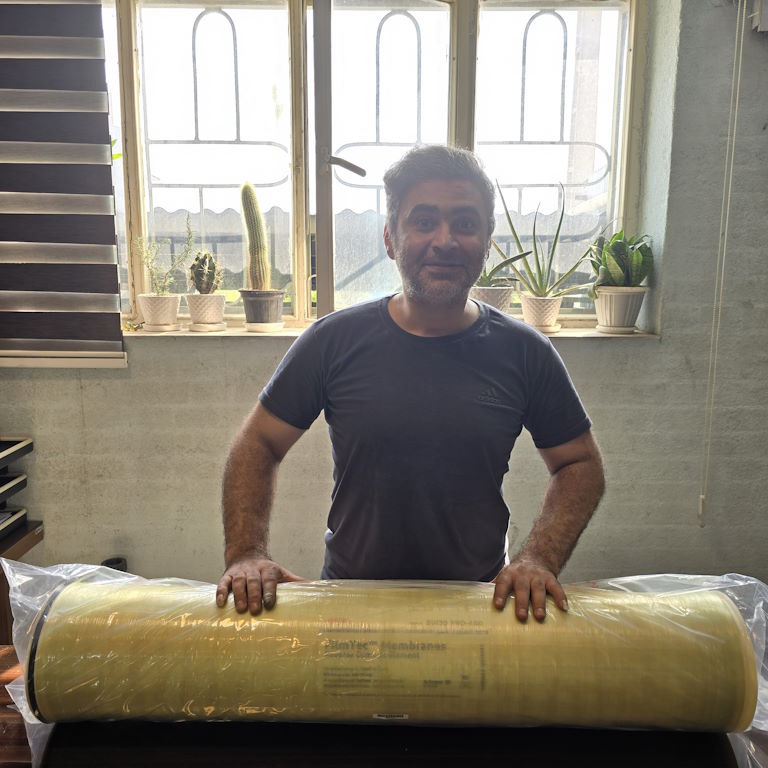
Slightly saline water CSM RE8040-BE440
Step four: Soaking time
After the first turn:
-
The solution remained inside the membrane for 15-30 minutes.
-
During this time, the chemical reaction is complete and the sediment softens.
-
In cases of severe air pollution, this time can be extended to two hours.
This is the most important step in removing the dirt.
Step 5: Second spin cycle and final rinse cycle.
After soaking again:
-
The solution flows through the membrane for 20-40 minutes.
-
At this stage, many deposits are removed and the particles are released.
In case of very heavy contamination, you can repeat the previous step.
Step 6: Rinse with clean water.
To avoid the generation of chemical waste:
-
The entire system is rinsed with deionized or purified water.
-
This phase continues until the pH of the liquid waste reaches the normal range (6-8).
-
Any remaining chemicals can damage the membrane, therefore this step is extremely important.
Step 7: Restart the system.
In the end:
-
The main water pump started working.
-
The system gradually returned to normal operation .
-
Check and record the parameters pressure, flow rate and total dissolved solids (TDS).
If the system does not return to its previous state, you may need to perform the following steps:
-
Rinse again
-
Membrane replacement
-
Improved system preprocessing
Yes.
What type of blockage needs to be resolved?
The following table briefly describes the most suitable chemicals for cleaning various types of contaminants:
| Type of congestion | slogan | Relevant chemicals |
|---|---|---|
| Precipitation of calcium carbonate | Increase pressure, decrease flow | Citric acid, which is a weak acid. |
| Precipitation of sulfates | This is extremely difficult and time-consuming. | special sulfuric acid |
| organic soil | Increase in total dissolved solids | Alkaline solution, reverse osmosis cleaner |
| microbial biofilm | It smelled bad and was sticky. | mixed alkaline bactericide |
| silicon dioxide | Traffic has decreased significantly. | Special alkaline anti-silicone materials |
Important tips for cleaning reverse osmosis membranes
To avoid injuries, please observe the following points:
1. Production of membranes using special chemical products.
Do not use strong acids (such as concentrated hydrochloric acid) or strong bases .
2. pH value check
-
The ideal pH value for pickling is between 2 and 3.
-
The ideal pH value for alkaline rinses is between 10 and 12.
3. Temperature control
The membrane will be damaged if the solution temperature exceeds 35 degrees Celsius .
4. The pressure should not be too high.
Maximum typical pressure for in-place cleaning (CIP):
approximately 2 bar (30 psi).
5. The clothes must be washed immediately.
If too much dirt accumulates, cleaning is ineffective.
6. Check the main filter before cleaning.
The main reason for the membrane becoming clogged quickly is a defective filter.
How can re-blocking of the membrane be prevented?
Prevention is better than cleaning. To extend the lifespan of the membrane :
 Use the standard main filter
-
Sand filter
-
Activated charcoal
-
5-micron filter cartridge
High-quality injectable plaque inhibitor
This prevents the precipitation of carbonates and sulfates.
Adjust the pH value of the incoming water.
A pH imbalance can accelerate staining .
Complete removal of chlorine from the water
Polyamide membranes are extremely sensitive to chlorine.
Regular partial washing
Even if there is no reduction in efficiency, regular cleaning can extend the lifespan of the membrane.
In conclusion
Reverse osmosis membranes are among the most important components of water treatment plants , and their regular maintenance is essential for system efficiency. Cleaning reverse osmosis membranes requires a series of precise steps, including acid washing, alkaline washing, soaking, and a final rinse. Selecting the appropriate chemicals and carefully executing each step not only extends the membrane’s lifespan but also significantly improves system efficiency.
With proper and timely cleaning, the membrane can maintain its performance characteristics for many years. However, if this problem is not addressed, the costs for maintenance and membrane replacement increase significantly.